

Childhood Lead Poisoning Prevention Program
Publications
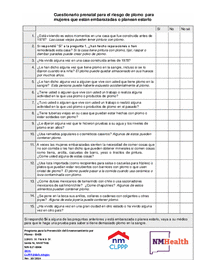
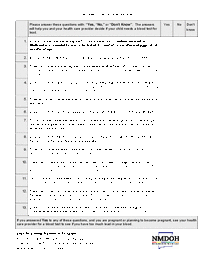 Child Lead Exposure Questionnaire
Lead Poisoning Prevention - Form
February 19, 2025
Child Lead Exposure Questionnaire
Lead Poisoning Prevention - Form
February 19, 2025
Use this questionnaire to help you and your health care provider to decide if your child needs a blood test for lead.
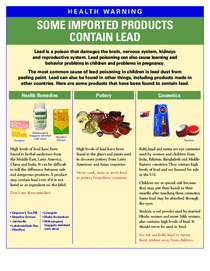 Some Imported Products Contain Lead
Lead Poisoning Prevention - Help
October 16, 2024
Some Imported Products Contain Lead
Lead Poisoning Prevention - Help
October 16, 2024
Some Imported Products Contain Lead
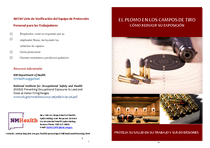 El Plomo En Los Campos de Tiro
Lead Poisoning Prevention - Help
October 16, 2024
El Plomo En Los Campos de Tiro
Lead Poisoning Prevention - Help
October 16, 2024
El Plomo En Los Campos de Tiro
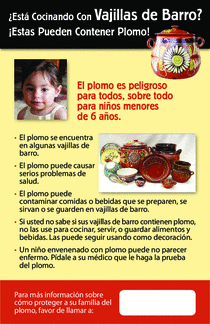 Vajillas de Barro Pueden Contener Plomo
Lead Poisoning Prevention - Help
October 15, 2024
Vajillas de Barro Pueden Contener Plomo
Lead Poisoning Prevention - Help
October 15, 2024
Vajillas de Barro Pueden Contener Plomo
 Prevention of Childhood Lead Toxicity
Lead Poisoning Prevention - General
October 31, 2023
Prevention of Childhood Lead Toxicity
Lead Poisoning Prevention - General
October 31, 2023
Prevention of Childhood Lead Toxicity
 Adult Lead Exposure Management Guidelines
Lead Poisoning Prevention - General
March 14, 2023
Adult Lead Exposure Management Guidelines
Lead Poisoning Prevention - General
March 14, 2023
Lead exposure can have adverse effects on various organs and systems in the body, resulting in negative health effects, both acute and chronic, depending on the level of exposure or dose, exposure duration, and other factors including dietary. In New Mexico, industries where lead exposure is common include public safety, radiator repair, mining and construction.
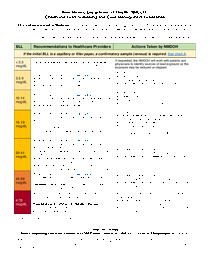 Child Lead Screening & Case Management Guidelines
Lead Poisoning Prevention - General
March 14, 2023
Child Lead Screening & Case Management Guidelines
Lead Poisoning Prevention - General
March 14, 2023
Lead poisoning continues to be an important, preventable environmental health problem. However, only a low number of children in New Mexico are screened for lead each year. This document provides technical guidelines for screening and managing cases of childhood lead poisoning.
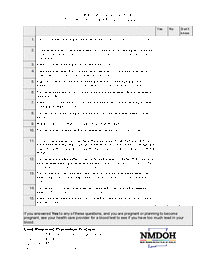 Prenatal Lead Risk Questionnaire
Lead Poisoning Prevention - Form
March 14, 2023
Prenatal Lead Risk Questionnaire
Lead Poisoning Prevention - Form
March 14, 2023
This questionnaire provides a list of questions intended to gather all the essential information required to help those who are pregnant or planning pregnancy determine if they need a blood test for lead.
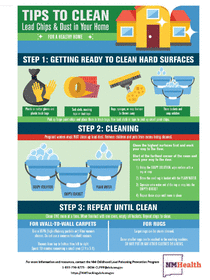 Tips to Clean Lead Chips and Dust Infographic
Lead Poisoning Prevention - Marketing
March 14, 2023
Tips to Clean Lead Chips and Dust Infographic
Lead Poisoning Prevention - Marketing
March 14, 2023
Lead dust and chips from lead-based paint are the most common source of lead poisoning. As lead-based paint ages, it can deteriorate (chip, crack, peel) because of weathering.
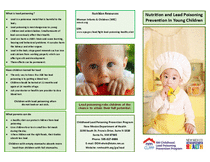 Foods that May Reduce Harmful Effects of Lead
Lead Poisoning Prevention - Help
June 2, 2016
Foods that May Reduce Harmful Effects of Lead
Lead Poisoning Prevention - Help
June 2, 2016
Lead is a poison and it interferes with many of the normal functions in the human body. This brochure provides information about nutrition and lead poisoning prevention in young children.
Los alimentos que pueden reducir dañinos efectos de plomo, الاطعمه التي قد تقلل من الآثار الضارة للرصاص, غذاهایی که ممکن است کاهش مضر اثرات از سرب, Vyakula kwamba inaweza kupunguza madhara athari ya kusababisha.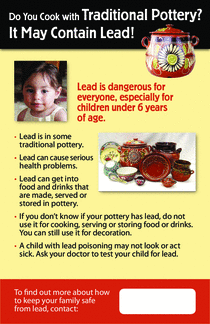 Traditional Pottery May Contain Lead
Lead Poisoning Prevention - Help
May 19, 2016
Traditional Pottery May Contain Lead
Lead Poisoning Prevention - Help
May 19, 2016
Lead can affect the nervous system, especially the growing brain, of infants and young children and cause learning and behavior problems that last a lifetime. Lead dust can get into a person’s body by breathing it in, by eating with unwashed hands, or from putting unwashed hands or objects that have lead dust on them into the mouth.
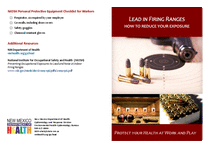 Lead in Firing Ranges
Lead Poisoning Prevention - Help
May 19, 2016
Lead in Firing Ranges
Lead Poisoning Prevention - Help
May 19, 2016
This is a personal protective equipment check list for workers explains a few simple steps you can take to reduce your exposure to lead at indoor firing ranges. These steps include wearing a respirator, coveralls including shoe covers, safety goggles, and chemical resistant gloves. It also provides some additional website resource links so you can learn more about preventing occupational exposures to lead and noise at indoor firing ranges.
 Lead in Tap Water
Lead Poisoning Prevention - Help
December 28, 2015
Lead in Tap Water
Lead Poisoning Prevention - Help
December 28, 2015
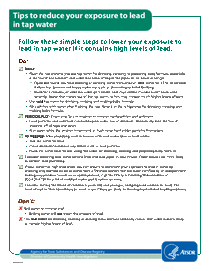
Tips to reduce your exposure to lead in tap water.
 Don’t Take Lead Home From Your Job
Lead Poisoning Prevention - Help
February 25, 2014
Don’t Take Lead Home From Your Job
Lead Poisoning Prevention - Help
February 25, 2014
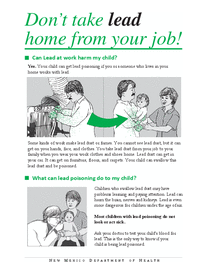
This document answers many questions about workers who are at risk of bringing home lead from work.